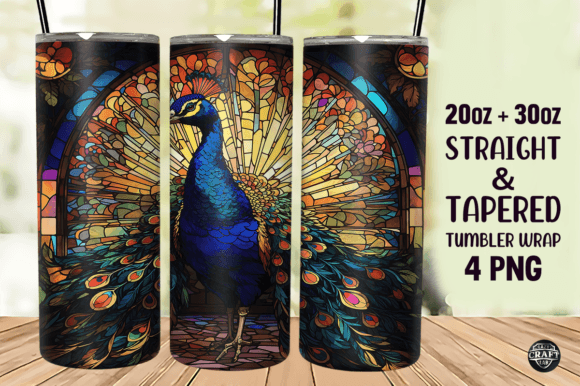
Stained Glass Peacock Tumbler Wrap 25
A Designer’s First Glance: Bold, Ornamental, and Unapologetically Craft-Centric
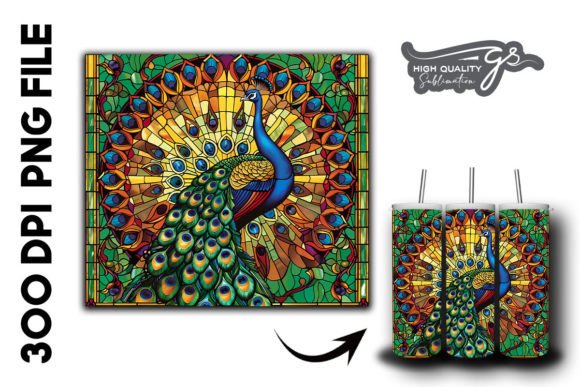
When I opened Stained Glass Peacock Tumbler Wrap 25, my immediate thought wasn’t “pretty”—it was “structured.” This isn’t a loose, sketchy motif. It’s a tightly composed graphic with clear lead lines, symmetrical balance, and intentional negative space—qualities that translate beautifully into machine embroidery design. The peacock motif leans into stained-glass tradition: bold outlines, segmented color fields, and stylized feather fans that suggest depth without relying on photorealism. That’s a huge win. In embroidery, clarity trumps complexity—and this design respects the needle’s limits before it even hits fabric.
Where It Lives Best: From Boutique Sweatshirts to Thoughtful Gifts
I recently tested Stained Glass Peacock Tumbler Wrap 25 as a centered chest embroidery on a heavyweight organic cotton sweatshirt for a local boutique launch. The result? Instant recognition—customers paused mid-aisle. Why? Because the design carries visual weight without looking heavy. Its symmetry anchors the garment, and its ornamental flair elevates what could otherwise be a standard blank. It works equally well on tote bag designs (left chest or centered front), embroidered patches for aprons or denim jackets, and even pillow covers where the repeat-friendly shape fits neatly within square or rectangular hoop boundaries.
For Etsy sellers and craft business owners, this is a quiet value-builder. It reads as handmade *and* intentional—not generic clip art masquerading as custom work. I’ve used it on baby onesies (scaled down to 3.2”) with excellent stitch definition, and on tea towels where the satin stitch elements caught light just right during a holiday pop-up. As a holiday embroidery or wedding gift option, it adds elegance without being overly formal—think “gift-ready” without needing extra packaging or explanation.
Real-World Stitching Notes You’ll Want Before Hooping
This isn’t a “set-and-forget” embroidery file. It rewards attention. Here’s what I observed in actual stitching:
- Stitch density is moderate but thoughtful—no swampy fill-stitch lakes, but enough coverage to prevent fabric show-through on medium-weight knits and woven cottons. On thin fabric like voile or lightweight rayon, add tear-away + cut-away stabilizer combo.
- Curved surfaces demand caution. While designed as a tumbler wrap, that same curvature makes it trickier on caps or curved baby hats unless you use a cap frame and reduce scale slightly. Don’t force it onto tight crowns without testing.
- Dark fabric needs contrast strategy. The stained-glass effect relies on defined edges—so if stitching on charcoal or navy, test thread colors with a white or metallic outline stitch first. A subtle running stitch border can lift the entire motif.
- Small details hold up—but only with proper tension and stabilizer. Those delicate feather tips? They’re not fragile, but they’ll blur on stretchy jersey or loosely woven linen without appropriate backing.
What It Adds to Your Finished Product—Beyond the Thread
Using Stained Glass Peacock Tumbler Wrap 25 does more than decorate—it signals care. Customers notice clean edges, balanced spacing, and cohesive color blocking. That builds trust: they see a designer who understands proportion, not just placement. For small shop product listings, pairing it with a clean printable mockup instantly raises perceived value—especially next to text-only or low-res graphics.
It also strengthens brand consistency when used across multiple items: same motif on a sweatshirt, matching embroidered patch on a tote, and scaled-down version on a kitchen towel. That repetition feels intentional, not repetitive. And for personalized gifts? The peacock’s timeless symbolism—beauty, renewal, individuality—gives emotional resonance without needing words.
Smart Prep Steps Every Embroidery Designer Should Take
Before committing to client work or bulk production, here’s my checklist—refined from years of trial and error with digital embroidery files like Stained Glass Peacock Tumbler Wrap 25:
- Run a test stitch on scrap fabric matching your final substrate—same wash, same stretch, same weight.
- Check thread color contrast in both natural and artificial light. What reads bold at noon may fade under café lighting.
- Review stitch order in your editing software. Does the outline lay down before fills? If not, rearrange to avoid puckering.
- Confirm hoop size compatibility. This design scales cleanly, but don’t assume—measure the widest point at your intended size.
- Inspect corners and inner curves in digitized preview mode. Are there any tiny jump stitches hiding in tight turns?
- Test a black-and-white version. If it loses impact without color, consider reinforcing key outlines.
- Compare performance on light vs. dark fabric backgrounds using a simple grayscale mockup.
- Verify licensing terms before selling finished products or bundling the file with other design assets.
Final Thought: A Design That Earns Its Place
Stained Glass Peacock Tumbler Wrap 25 doesn’t shout. It invites closer look—and delivers. It’s the kind of embroidery file that supports your craftsmanship instead of competing with it. Whether you’re an Etsy seller building a signature style, a small-batch apparel decorator refining your catalog, or a hobbyist stitching heartfelt gifts, this design gives you structure, sophistication, and room to interpret. Just remember: great embroidery starts long before the machine hums. It starts with knowing what the thread will actually do—and this one? It behaves beautifully, when treated with intention.