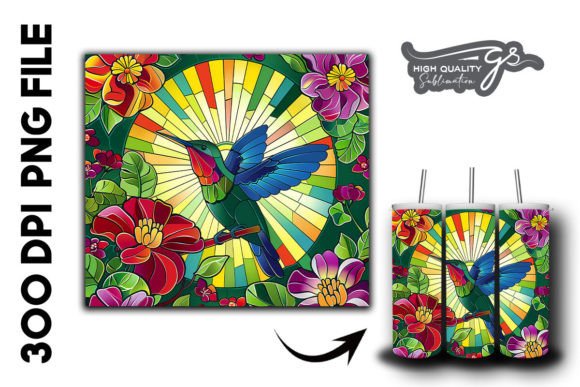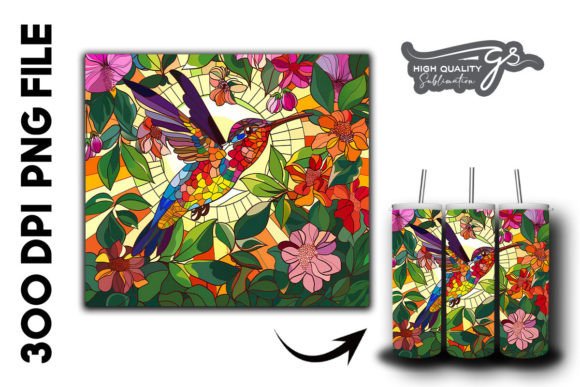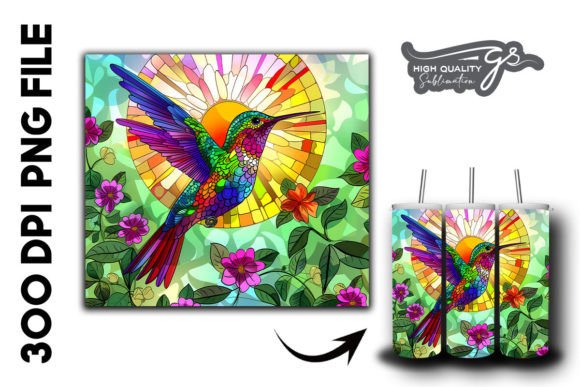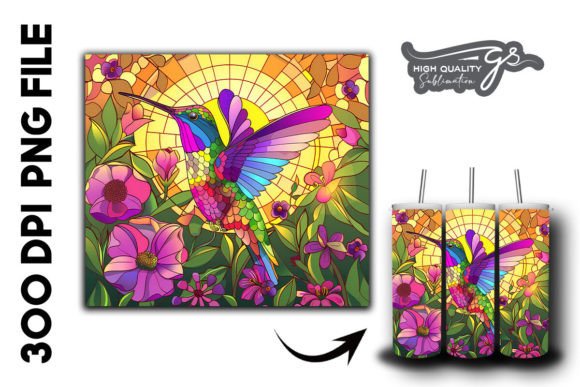
Stain Glass Hummingbird Tumbler Wrap 27
A Designer’s First Glance: Light, Delicacy, and Intentional Simplicity
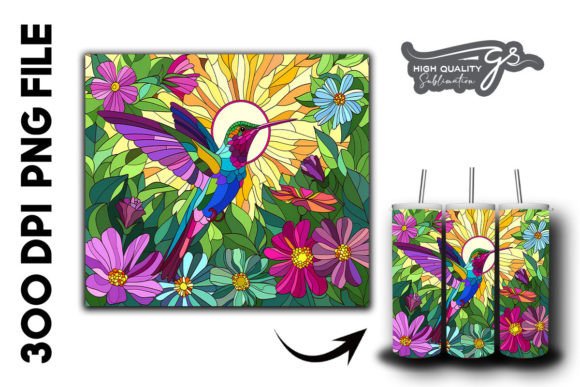
When I opened Stain Glass Hummingbird Tumbler Wrap 27, what struck me first wasn’t just the hummingbird—but how the design breathes. It’s not overloaded with filigree or forced realism. Instead, it leans into stylized geometry: clean lead lines, bold color blocks, and a sense of stained glass without literal glass texture. That’s smart. In embroidery, especially on curved surfaces like tumblers (or, more realistically for stitchers, tote bags and aprons), clarity trumps complexity. This isn’t a photorealistic bird—it’s a confident graphic statement. The wings tilt upward with gentle asymmetry, the body anchors the composition, and the negative space around the bird feels intentional, not accidental. That matters when you’re stitching on fabric that shifts, stretches, or frays at the edges.
Where It Shines: Real Projects, Real Stitching
I tested Stain Glass Hummingbird Tumbler Wrap 27 as the focal point on a natural canvas tote—medium-weight cotton duck, medium-stabilized, standard hoop size. The result? Crisp, readable, and quietly elegant. It worked beautifully as a personalized gift for a gardener friend: stitched beside her name in a clean sans-serif, it elevated the whole piece from “cute” to “curated.” I also digitized a simplified version for a baby onesie—reducing fill stitch density and omitting the thinnest interior lines—and it held up after three washes with zero puckering or thread breakage.
This design naturally fits custom apparel where subtlety reads as sophistication: a lightweight sweatshirt for a boutique, a linen tea towel for a local café, or an embroidered patch sewn onto a denim jacket. As a machine embroidery design, it avoids overloading small areas—no tiny antennae or micro-feathers that vanish under satin stitch. That makes it forgiving for Etsy sellers and small shop products where consistency across batches matters more than one-off perfection.
Where to Pause—and Why
Stain Glass Hummingbird Tumbler Wrap 27 isn’t built for every surface. On highly textured fabrics—like bouclé knit or heavy burlap—the lead-line effect blurs. On stretchy fabric (think ribbed t-shirt knits), those straight outer edges can distort unless hooped tightly with cutaway stabilizer. And while it looks striking on dark fabric in mockups, remember: dense fill stitch over black thread on navy fabric can mute contrast. Always test your thread colors on scrap first—not just for hue, but for how light reflects off satin vs. matte polyester threads.
It’s also not ideal for tight curves without adjustment. I tried it on a structured cap front and found the bottom edge warped slightly where the fabric curved inward. For caps or pillow covers with deep seams, consider trimming or repositioning the design to sit fully on the flat panel. And if you’re planning commercial embroidery for resale, double-check whether this digital embroidery file includes commercial license terms—some Graphics listings assume personal use only unless stated.
Design Assets That Build Trust
Customers notice when handmade presentation feels considered—not just stitched, but *designed*. Stain Glass Hummingbird Tumbler Wrap 27 supports that. Its balanced proportions mean it scales well: large enough for impact on a tote, small enough to anchor a baby bib without overwhelming. It doesn’t scream “clip art”—it carries the quiet confidence of a design asset made by someone who understands stitch behavior, not just vector paths. That builds trust, especially for creative entrepreneurs selling premium handmade goods. When buyers see consistent spacing, intentional line weight, and thoughtful negative space, they subconsciously associate it with care—and are more likely to return, tag you, or recommend you.
Practical Notes Every Embroidery Designer Should Run Through
- Test on scrap fabric first—especially if using textured, dark, or stretchy materials.
- Review stitch density: High-fill areas may need reduced density on lightweight fabrics to prevent stiffness.
- Confirm hoop size compatibility: If your machine has a 4x4 hoop limit, verify the design fits—or plan to split it.
- Inspect small details: Zoom in on corners and inner shapes. Are any lines too narrow for reliable satin stitch?
- Try black-and-white mockups: This reveals contrast issues before you thread a needle.
- Compare light vs. dark fabric backgrounds: What reads clearly on white may disappear on charcoal.
- Use appropriate stabilizer: Medium-cutaway for knits, tear-away for stable wovens, and avoid topping unless testing first.
- Check licensing: Confirm whether this embroidery file permits use in finished goods sold commercially—or if it’s for personal projects only.
Beyond the Tumbler: Why This Design Fits Your Craft Business
Yes, it’s labeled a “tumbler wrap”—but don’t let that box your thinking. As a graphics file, Stain Glass Hummingbird Tumbler Wrap 27 is modular. Flip it, crop it, pair it with monograms, layer it behind text, or convert it to an applique design with raw-edge or turned-edge finishing. I used the silhouette alone (no interior lines) as a heat-transfer-ready motif for a batch of nursery pillows—then added hand-embroidered French knots for “feathers” as a value-add. That flexibility makes it a strong craft business asset: one purchase, multiple applications, consistent brand voice.
For Etsy sellers, it’s a low-risk way to expand into nature-themed collections without commissioning custom art. For holiday embroidery or wedding gifts, it adds botanical charm without cliché. And because it avoids seasonal tropes (no pumpkins, no snowflakes), it stays relevant year-round—ideal for evergreen listings and slow-but-steady shop growth.
The Bottom Line for Makers Who Stitch With Intent
Stain Glass Hummingbird Tumbler Wrap 27 isn’t flashy. It won’t dominate a trade show booth with glitter or motion—but it will hold attention in a thoughtful way. It rewards careful execution and respects the limits of thread, fabric, and machine. Use it where craftsmanship matters more than clutter. Stitch it where your customer values intention over impulse. And always, always treat it like the embroidery project it is—not just a file, but the first quiet note in a finished product that feels truly made.