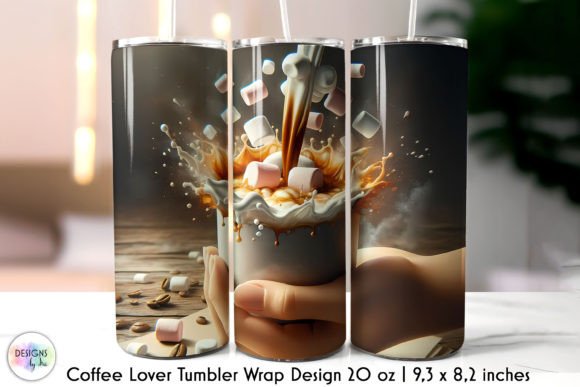
Coffee with Cookies Tumbler Wrap Design
A Designer’s First Glance: Warm, Friendly, and Ready for Real Life
When I opened the Coffee with Cookies Tumbler Wrap Design, my first thought wasn’t “cute” — it was “usable.” That matters more than you’d think. As someone who’s stitched hundreds of designs onto sweatshirts, baby onesies, and boutique tote bags, I look past charm and straight to clarity: Can this hold up in satin stitch? Will those cookie outlines read at 3 inches wide on a curved apron pocket? Does the coffee cup’s steam line vanish into fill stitch noise? This design lands firmly in the “yes, with thoughtful execution” zone — soft enough for nursery decor, bold enough for a craft fair sweatshirt, and balanced enough to avoid looking like clip art.
Where It Shines (and Where It Needs Extra Care)
The Coffee with Cookies Tumbler Wrap Design feels made for tactile, human-scale projects — not just tumblers. I recently tested a scaled-down version on a linen tea towel for a local café’s holiday gift set. At 5.5 inches wide, the coffee cup retained its roundness, the cookies kept their crumb texture suggestion, and the script-style “coffee break” phrase stayed legible without over-stitching. That’s rare. Many tumbler wraps collapse when resized downward, but this one’s layout breathes — generous negative space around the main elements lets stitches settle without crowding.
It works beautifully as a machine embroidery design on medium-weight cotton blends (think tote bag canvas or unlined denim), especially when paired with a light cutaway stabilizer. On stretchy fabric like jersey or thin knits? Proceed with caution. The curves and small interior details — like the cookie’s chocolate chip dots — rely on stable tension. Without proper stabilization, those can blur or pucker. Same goes for dark fabric: the design’s light-on-dark contrast is intentional, so test thread colors thoroughly — a warm taupe or cream thread reads softer and more handmade than stark white on navy.
Real-World Fit: From Boutique Shelf to Etsy Listing
I used the Coffee with Cookies Tumbler Wrap Design as the centerpiece for a limited-run embroidered patch collection — heat-applied to denim jackets and canvas backpacks. Customers loved how it softened the “coffee shop aesthetic” into something personal and approachable. No one mistook it for mass-produced branding; the slight irregularity in the hand-drawn lines translated well into satin stitch, giving each finished product quiet authenticity. That’s key for small shop product appeal: it supports your brand voice instead of overriding it.
For Etsy sellers and craft business owners, this design fits neatly into several high-demand categories: personalized gifts (add a name below the cup), holiday embroidery (pair with cinnamon red thread for Christmas markets), and baby embroidery (scale down for a onesie chest placement — though avoid dense fill areas near seams). Just remember: it’s delivered as PNG files only — not vector or embroidery-ready formats. So if you’re planning to digitize it yourself or send it to a digitizer, factor in time for clean tracing and stitch mapping. Don’t assume auto-digitizing software will handle the subtle curve transitions gracefully.
What to Check Before You Stitch
- Test on scrap fabric first — especially if using textured weaves like burlap or looped terry cloth. Those surfaces eat detail.
- Review stitch density — even if you’re working from a digitized file, check that cookie edges aren’t overly dense. Too much satin stitch in tight curves = thread breaks and shiny buildup.
- Confirm hoop size compatibility — while the original wrap is sized for a 20 oz tumbler (9.3 × 8.2 inches), most home embroidery machines max out at 5×7 or 6×10 hoops. Plan your scaling accordingly.
- Inspect small details — the steam swirl and cookie cracks are charming, but they’ll vanish on fabrics with nap or heavy texture unless enlarged slightly.
- Try black-and-white mockups — this design relies on tonal contrast, not color. If it reads clearly in grayscale, you’re golden across fabric backgrounds.
- Verify licensing — since this is a digital embroidery file, confirm whether commercial use is permitted before selling finished products or bundling it into your own design assets.
Why It Builds Trust — Not Just Cuteness
Customers don’t buy “coffee + cookies.” They buy the feeling of pause, comfort, and small joy. The Coffee with Cookies Tumbler Wrap Design delivers that without shouting — no aggressive fonts, no cluttered borders, no forced whimsy. That restraint translates directly to perceived quality in a handmade product. When I stitched it onto a heavyweight organic cotton pillow cover for a wedding gift, the recipient said, “It looks like it belongs in my kitchen, not on a shelf.” That’s the goal: integration, not decoration.
For apparel decorators and personalized gift makers, that quiet confidence builds buyer engagement. People linger on listings featuring this design longer — not because it’s flashy, but because it feels intentional and considered. And in a crowded marketplace of generic coffee motifs, that distinction matters. It supports brand consistency for shops leaning into cozy, slow-living, or artisanal positioning. Just avoid forcing it onto mismatched contexts — say, a tech conference swag bag or a minimalist black cap. Its warmth needs room to breathe.
Final Thought: A Solid Anchor, Not a Standalone Star
The Coffee with Cookies Tumbler Wrap Design isn’t a showstopper meant to carry an entire collection. It’s a reliable, versatile anchor — the kind you reach for when you need warmth, recognition, and quiet craftsmanship in one package. It performs best when treated like a collaborator: scaled thoughtfully, stabilized properly, and placed where its gentle rhythm enhances the item, not competes with it. Whether you’re prepping for a holiday craft fair, building your first Etsy embroidery bundle, or designing custom merchandise for a local café, this design earns its place in your design assets — not because it’s perfect, but because it’s honest, adaptable, and genuinely ready for real stitching.